Nikhil Yadala · Healome One Inc.
github.com/Healome/OpenAge · OpenAgeAI.com
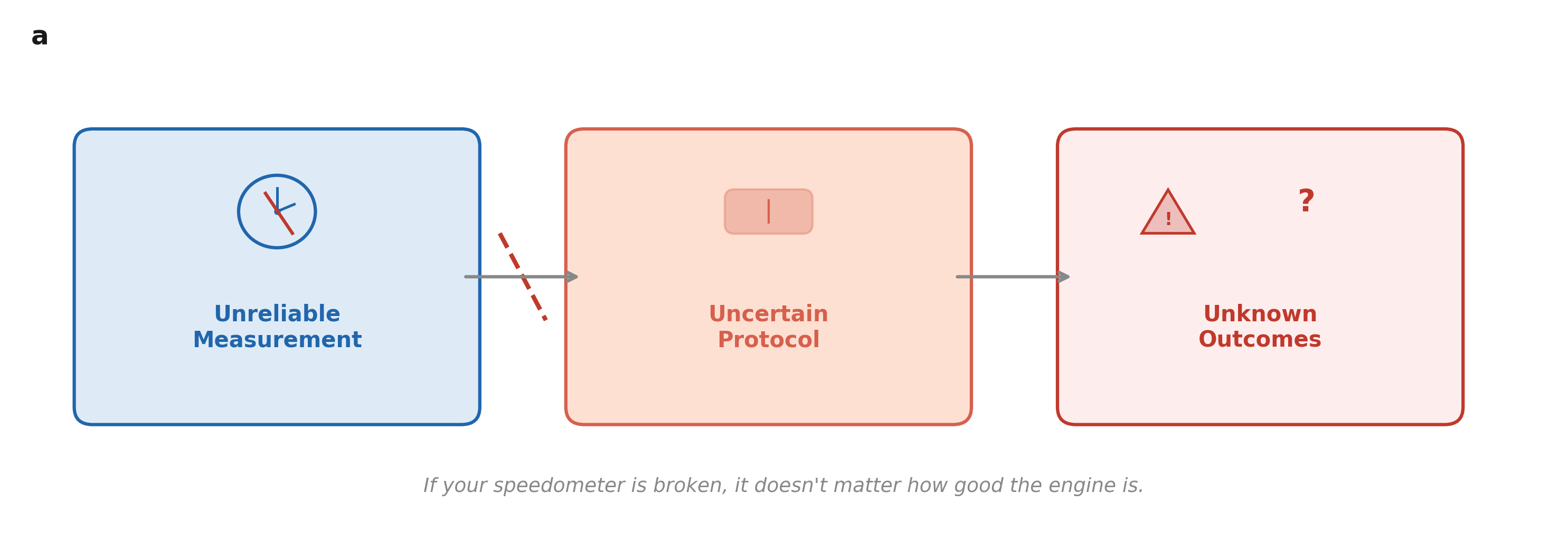
And without a working speedometer, you can't tune the engine. You can't design lab-validated protocols, dose interventions for optimal performance, or know which lever moved which marker. The whole optimization layer downstream collapses on top of a broken measurement.
| Modality | Examples | Cost / sample | Test–retest | Interpretable? |
|---|---|---|---|---|
| Epigenetic (DNAm) | Horvath · GrimAge · DunedinPACE · PhenoAge | $300–500+ | Poor | No |
| Proteomic (plasma) | Lehallier · SomaScan · Olink | $200–500 | Good | Partial |
| Transcriptomic | Peters et al. | $$$ | Moderate | Partial |
| Metabolomic | Hertel · MetaboAge | $$$ | Moderate | Partial |
| Blood-clinical (CBC + CMP) | PhenoAge formula · BioAge · OpenAge | $10–50 | High | Yes |
| Imaging | Brain-age · retinal-age | $$$$ | Good | Partial |
| Functional / wearable | WHOOP age · grip-strength | $ | High | Yes |
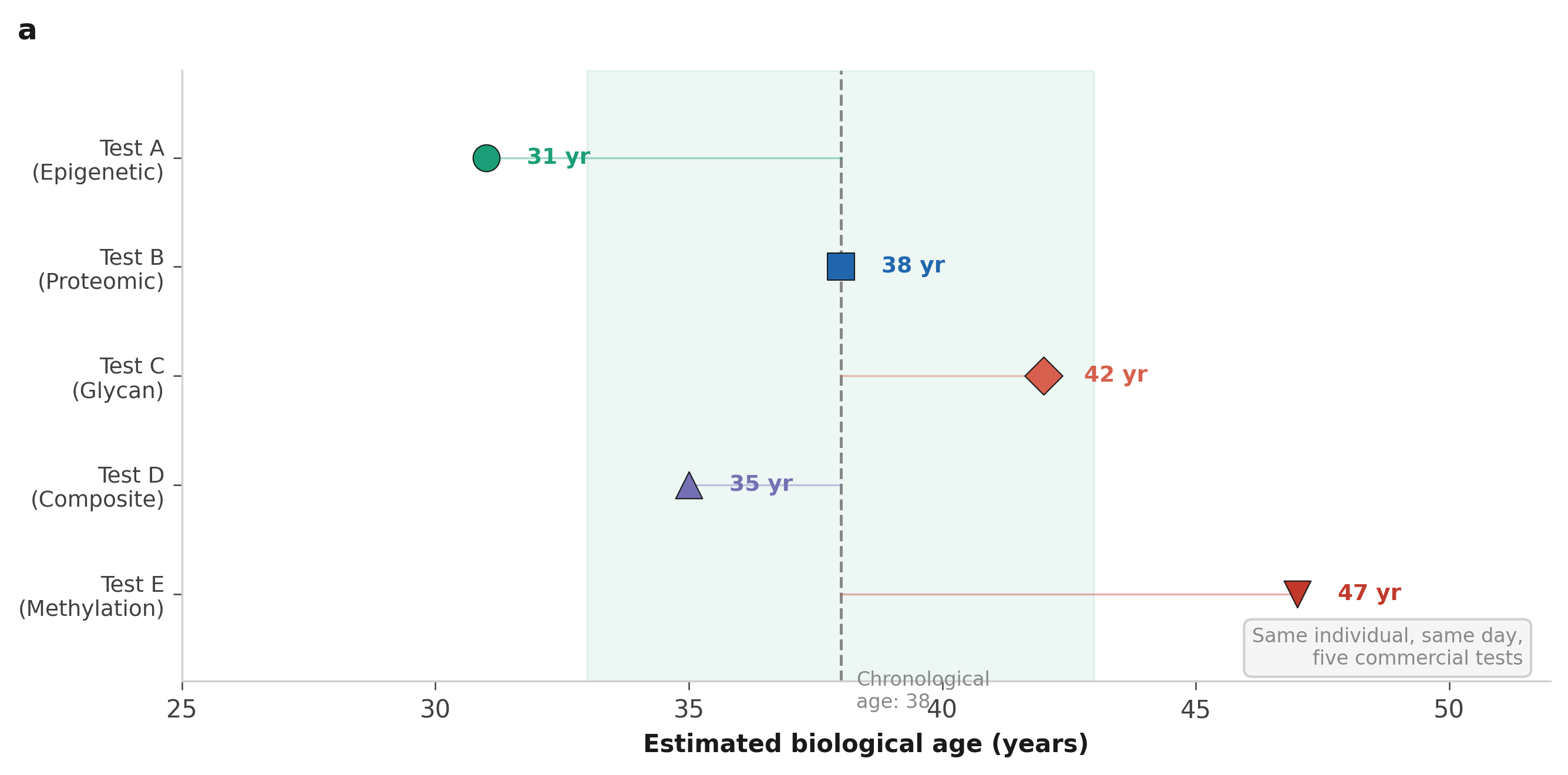
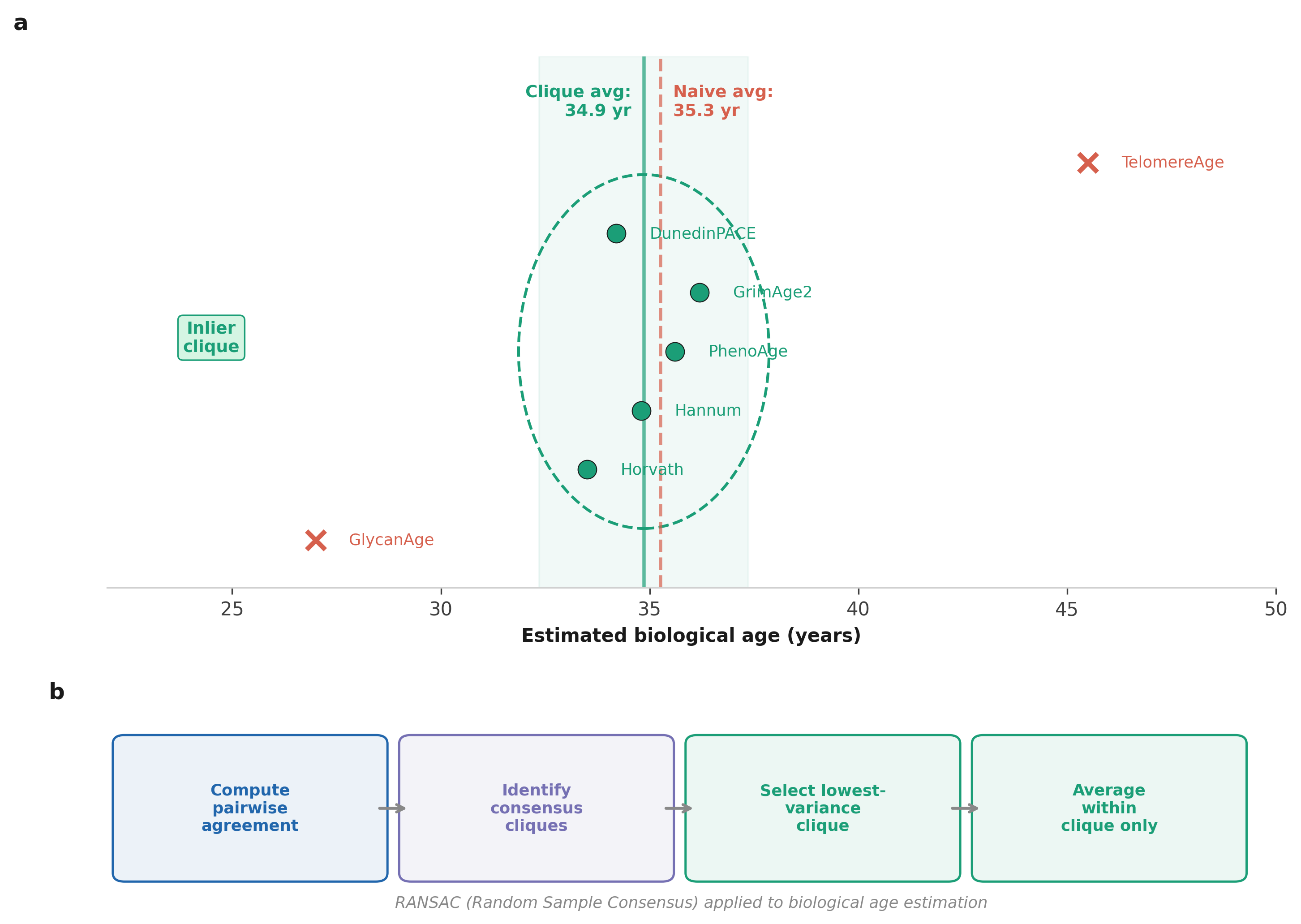
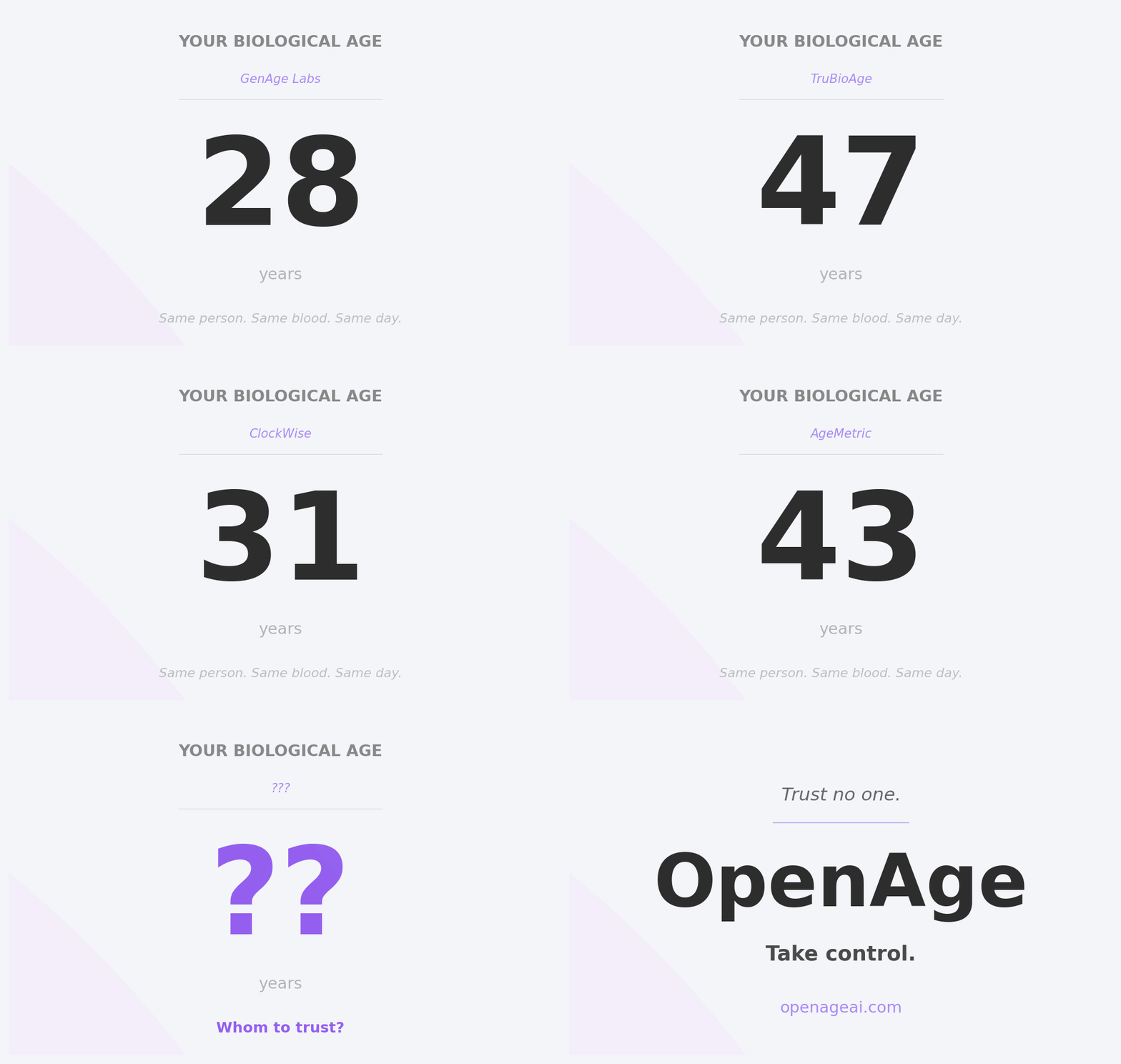
Take multiple clocks. Average them. Done.
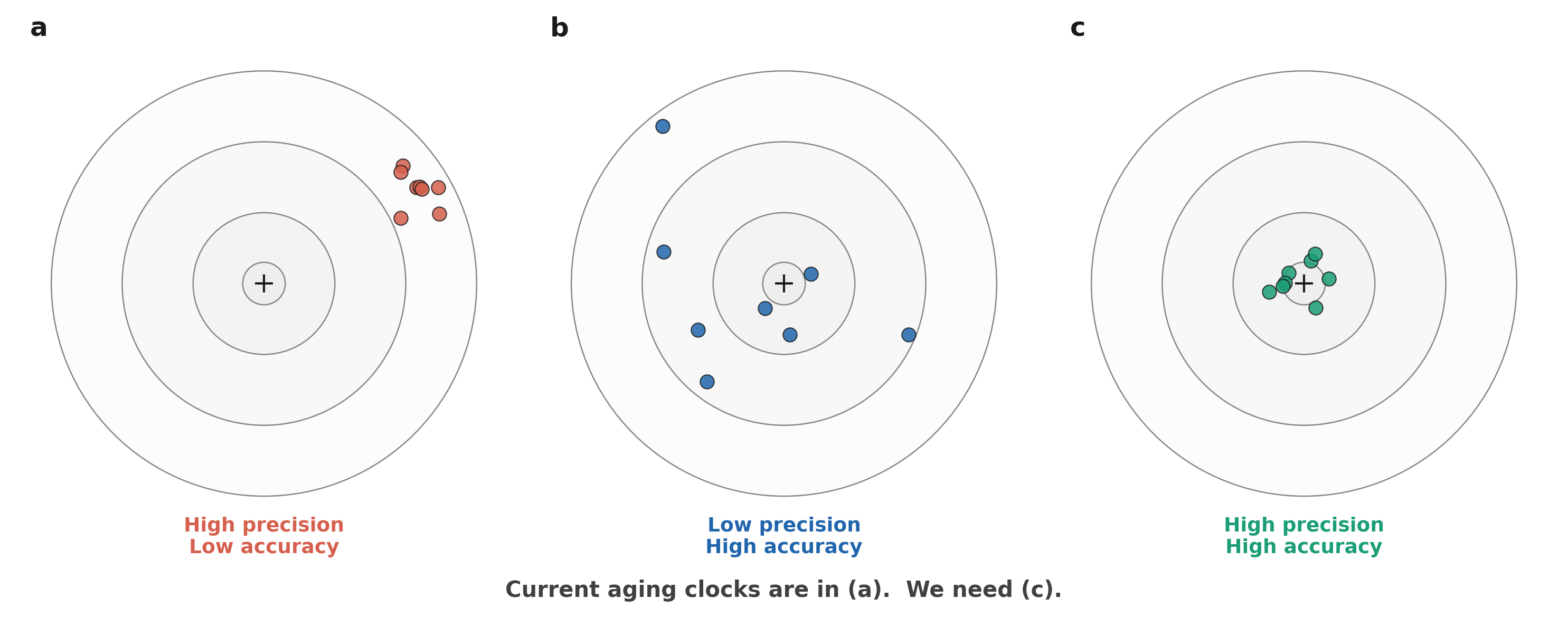
Averaging cuts variance. It does nothing for bias.
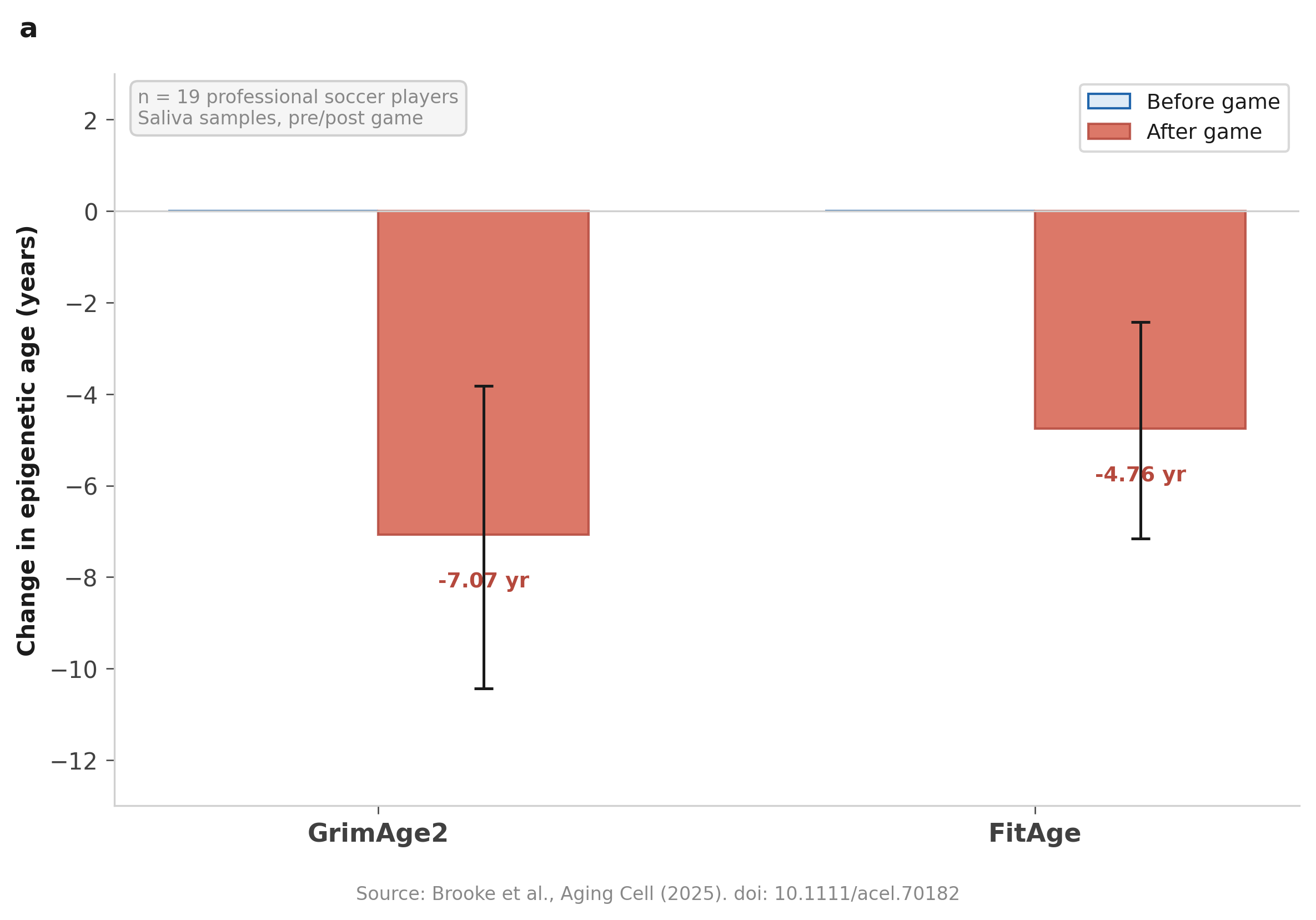
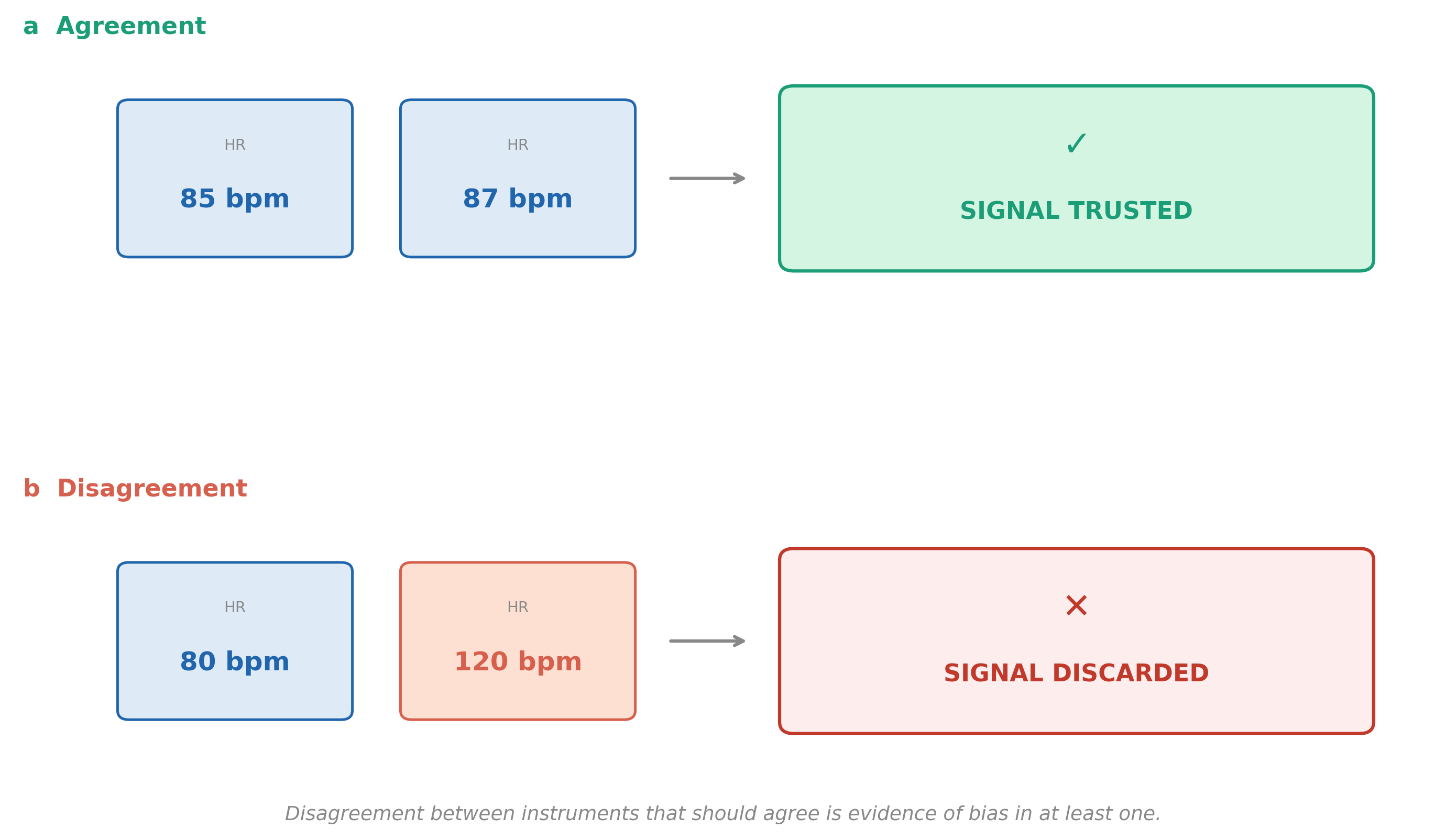
If GrimAge over-estimates and DunedinPACE caught a flu, you converge to the wrong answer with high confidence.
| Spec | Almost every published clock | OpenAge |
|---|---|---|
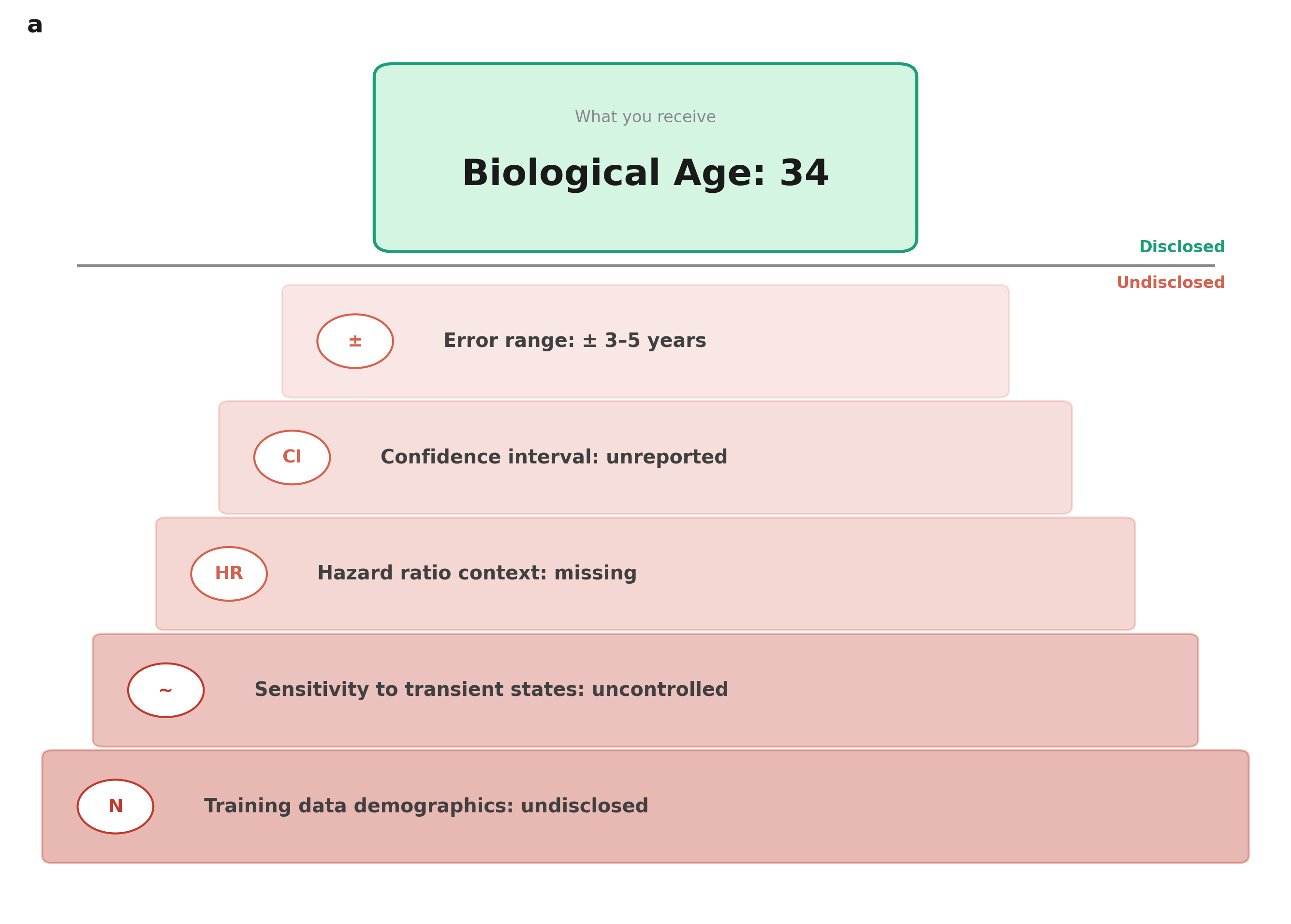
| Public training data | ✗ | ✓ |
| Frozen public test split | ✗ | ✓ |
| Ground truth outside the model | ✗ (chronological age) | ✓ (deaths · CDC linked) |
| Open weights | ✗ | ✓ |
| Inference traces · audit trail | ✗ | ✓ (notebooks + leaderboard) |
| Disease-specific stratification | ✗ | ✓ (10 ICD causes) |
So we did. This is the rest of the talk.
| Cause of death | HR / yr | Conc. |
|---|---|---|
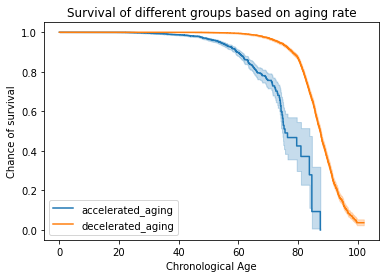
| Pneumonia / influenza | 1.131 | 0.88 |
| Kidney disease | 1.125 | 0.87 |
| Heart disease | 1.114 | 0.86 |
| Diabetes | 1.107 | 0.84 |
| Alzheimer's | 1.095 | 0.83 |
| Cancer | 1.088 | 0.82 |
| Stroke | 1.036 | 0.64 |
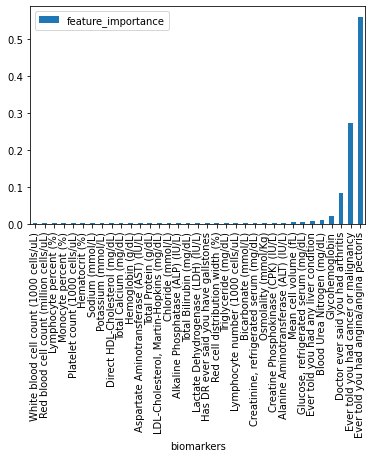
Stroke is weakest — no BP or AFib in the panel. The model knows what it doesn't know.
| Clock | HR/yr | Conc. | Open |
|---|---|---|---|
| PhenoAge (DNAm) | 1.071 | 0.86 | Partial |
| OpenAge | 1.098 | 0.83 | Yes |
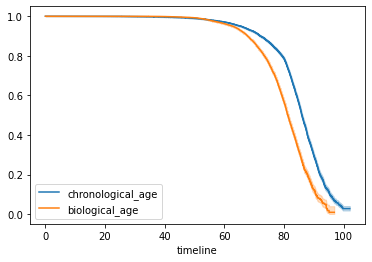
PhenoAge wins concordance — trained on a mortality phenotype, optimized for rank-ordering. OpenAge wins per-year HR — what one year of bio-age reduction is worth in mortality terms.
blood draw ↓ OpenAge + marker decomposition ↓
intervention ↓ 8 weeks ↓ redraw → which markers moved?
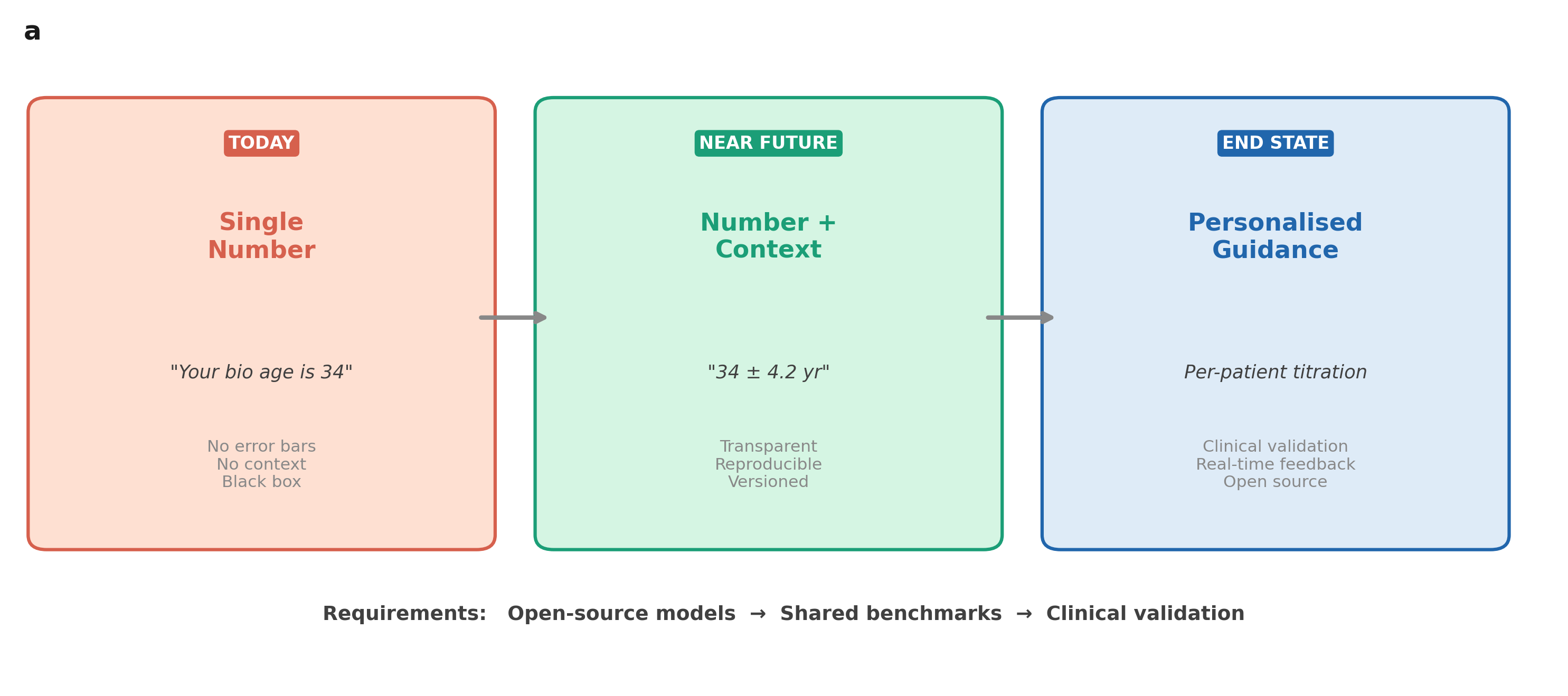
measure → intervene → re-measure
Targeting MAE ≈ 1–2 yr (down from 5.11 yr in v1) by training on longitudinal repeats and a richer feature set.
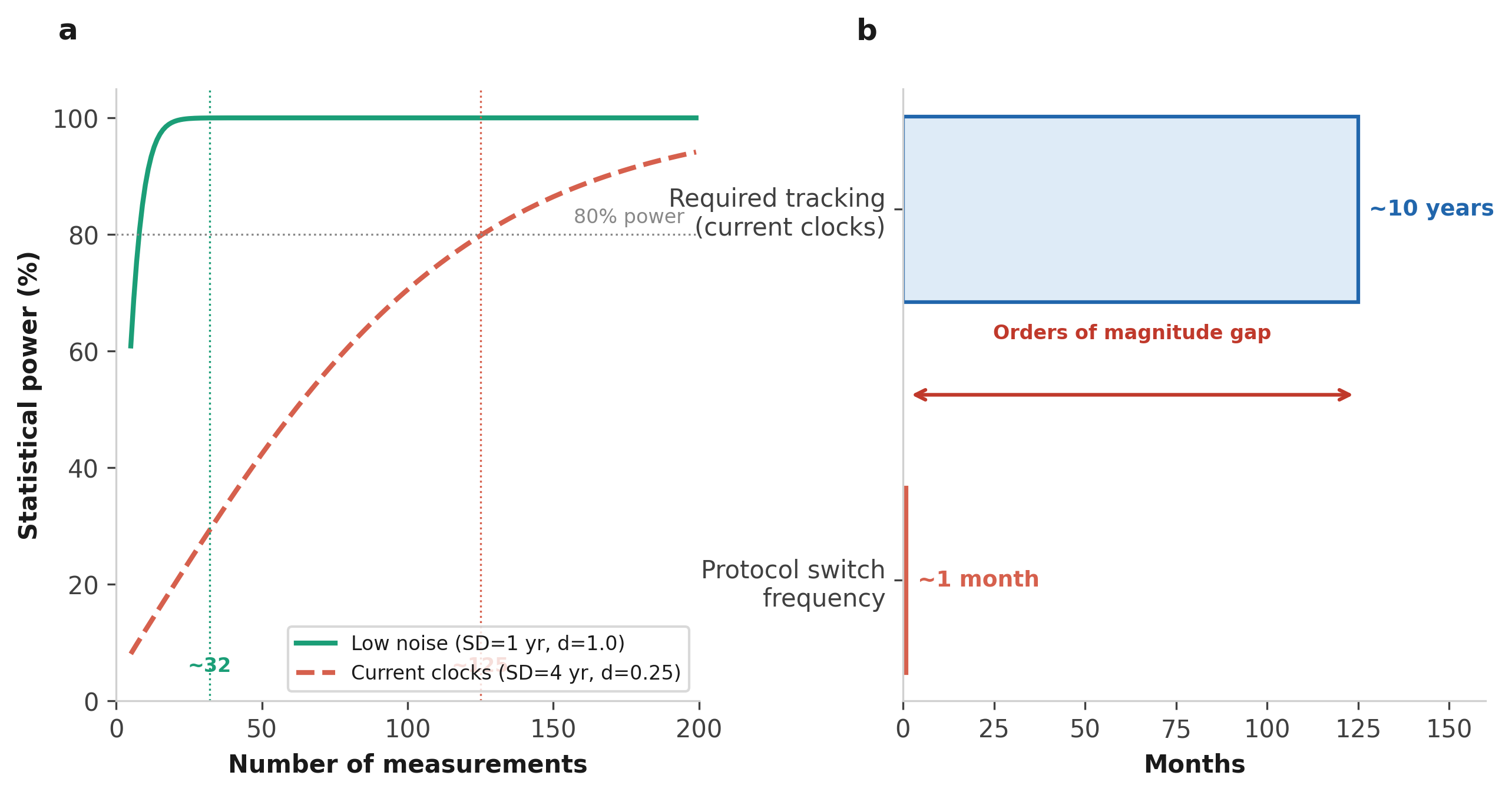
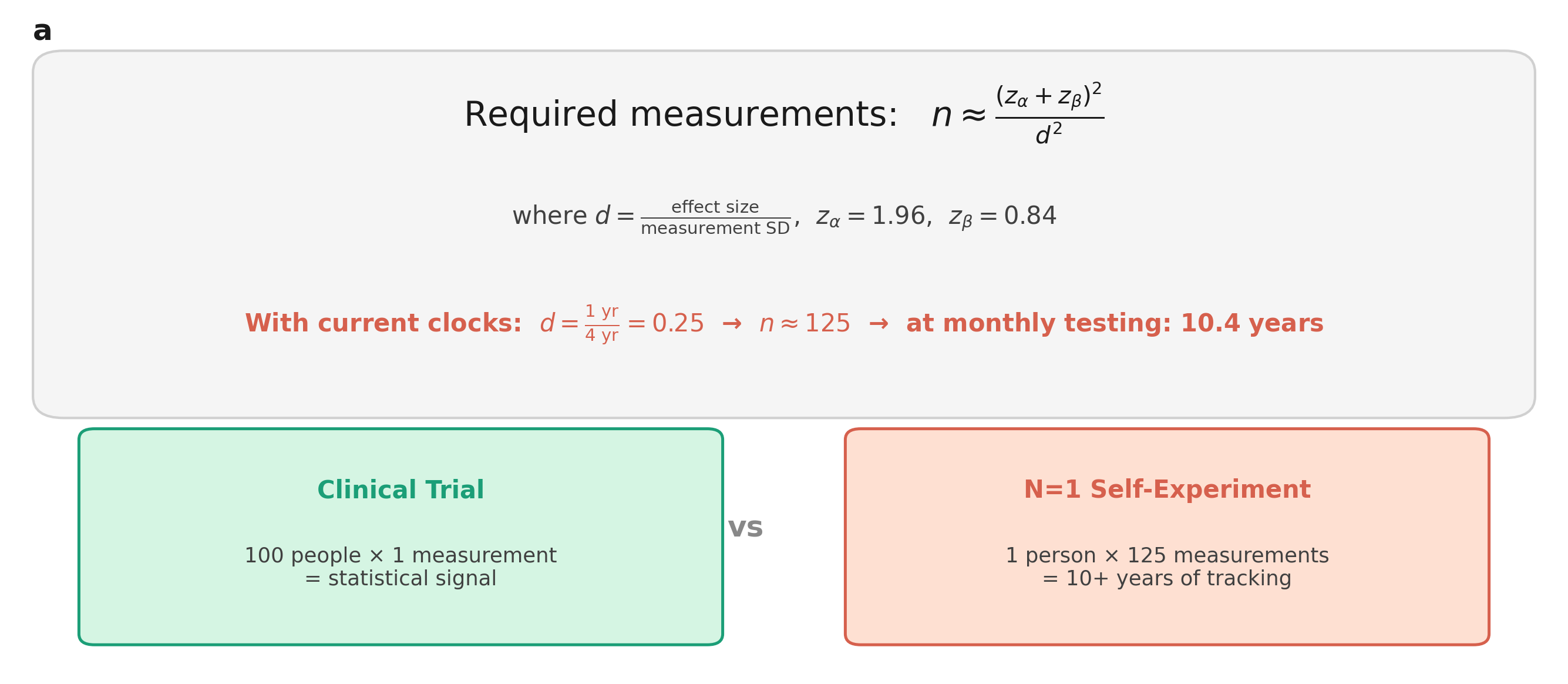
A smaller MAE means a smaller noise floor in the n=1 math: detecting a 1-year change goes from d = 0.25 to d ≈ 0.5–1.0, and the required samples drop from ~125 to ~16–32.
Population statistics → individual closed-loop optimization.
The same shift NLP made when it went from corpus-level perplexity to per-conversation RLHF.
Not the optimization. The measurement layer.
Plasma proteomics + metabolomics at fortnightly cadence is what closes the RL loop on human aging. Reward signal in weeks, not years.
Beat the leaderboard. 21 features, frozen test split. Drop in your model. Add a clock — GrimAge, DunedinPACE, your own. Same eval harness.
Upload your last blood panel. See your OpenAge, the marker decomposition, and which physiological systems are accelerating.
If you're on a peptide stack, hormone protocol, or supplement regimen — and you want to know what's actually working — we're recruiting now.
You stop being n=1 and start being a labeled training example for the proteomic + metabolomic clock.
nikhil@OpenAgeAI.com